Past Event · Kigali, Rwanda

Women's Potential
in Cinema

March 24, 2013 Date
Kigali Serena Hotel Location
6:00 PM – 8:00 PM Hours
Umbrella Cinema Promoters Presented by
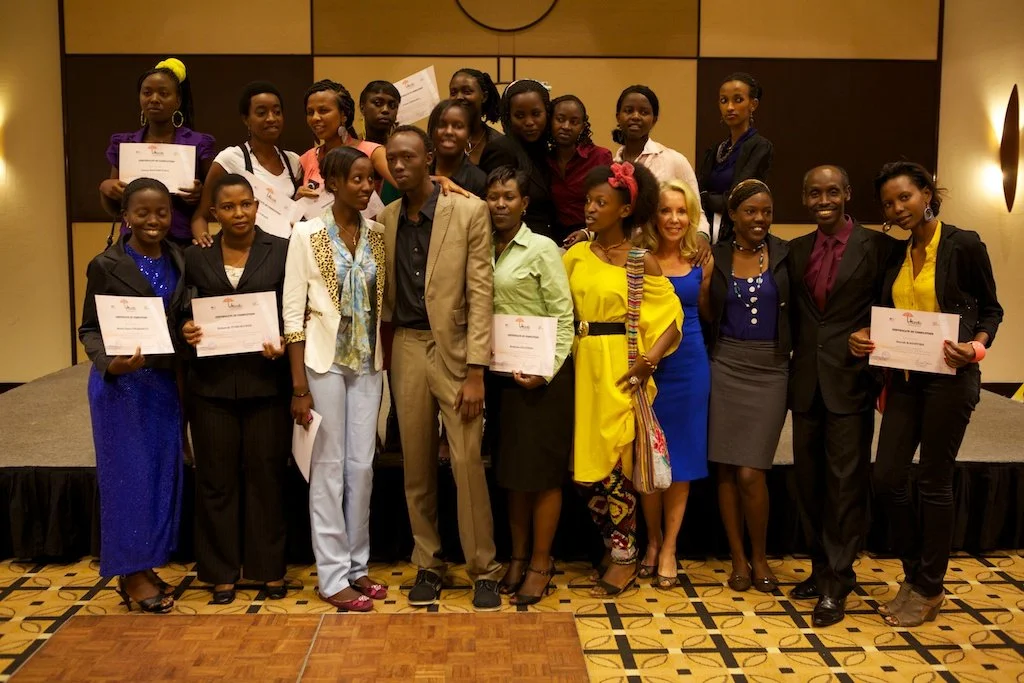
Graduates of the Women's Potential in Cinema workshop on stage with their certificates of completion, alongside international partners, at the closing ceremony — Kigali Serena Hotel, March 24, 2013.
Workshop graduates and partners at the closing ceremony · Kigali Serena Hotel, March 24, 2013

She was 22 years old. She had never given a public speech at a formal institutional event. And she had built something — a workshop, a curriculum, a cohort of young women who had arrived from every province in Rwanda with no filmmaking experience and were leaving with a certificate, a finished film, and something they could not have named when they arrived: the knowledge that their story deserved a screen.

On March 24, 2013, Dydine Umunyana Anderson stood at the podium of the Kigali Serena Hotel to launch Umbrella Cinema Promoters and celebrate the closing ceremony of the inaugural Women's Potential in Cinema workshop. In the room were ministers from the Rwandan government, senators, international partners, and the young women who had just completed fifteen days of intensive training in cinematography, scriptwriting, directing, and editing.

It was not a small moment. It was the beginning of everything that followed.

What the Workshop Was

Women's Potential in Cinema was not a film appreciation course. It was a rigorous, professional-grade training program — fifteen intensive days, built in four parallel tracks.

Scriptwriters and storytellers moved from introduction to concept development to script completion. Directors learned technique, grammar, and the relationship between director and actor. Editors worked inside Final Cut from basic capture to full post-production. Cinematographers handled real cameras from Day 1, moving through angles, techniques, and live shooting practice before Day 8, when all four tracks merged into a single production — one story, conceived and executed entirely by the participants, screened publicly on the final day.

Workshop at a Glance

Duration
15 intensive days
Tracks
Scriptwriting · Directing · Editing · Cinematography
Participants
Twenty young women, from across Rwanda
Final Day
Public screening of participant-produced film
Participation Fee
None — fully funded through grants and partnerships
Completion
Certificate of completion awarded to each graduate
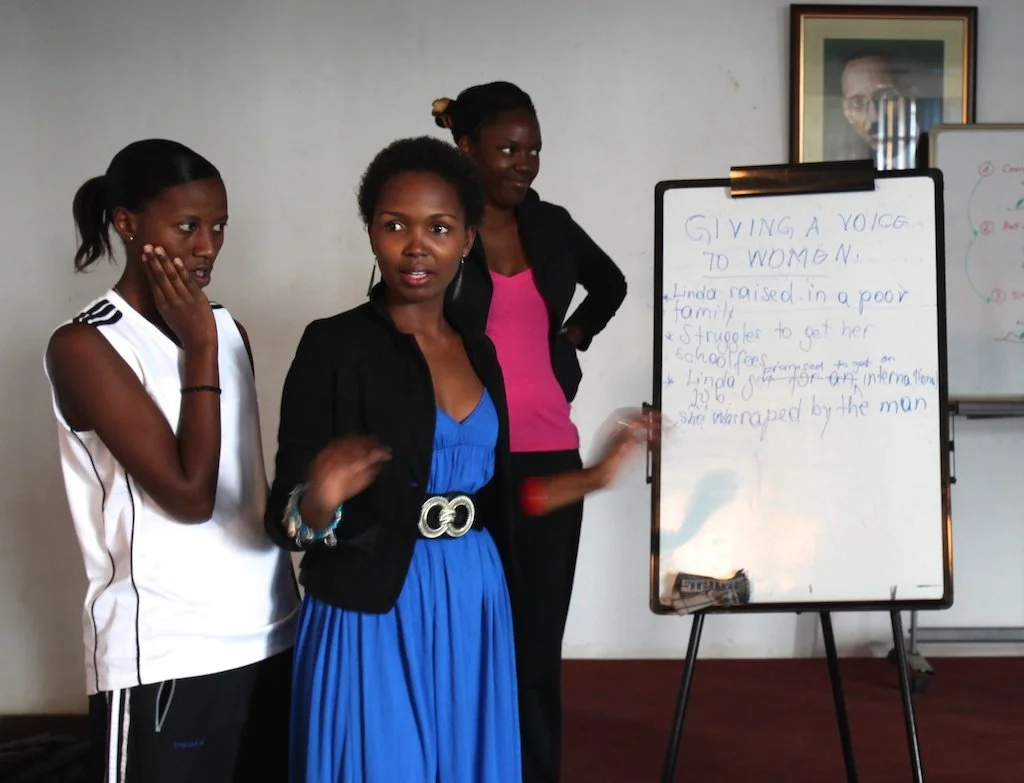
Participants developing a story on a flip chart headed 'Giving a Voice to Women' during the Women's Potential in Cinema workshop, Kigali, Rwanda, 2013.
Inside the workshop — developing a story, “Giving a Voice to Women” · Kigali, 2013

The Conviction Behind It

Dydine had survived the 1994 Genocide Against the Tutsi in Rwanda. She had grown up inside a country choosing to face what had happened rather than bury it. And she had come to understand something early: silence is not neutral. It is the first condition of erasure.

Cinema was her answer. Not film as entertainment — film as testimony. As a way for women who had survived extraordinary things to speak, and be heard, on their own terms. The women she was training were not being given a hobby. They were being given a tool. A way to make the world look at what they had lived.

"Silence is not neutral. It is the first condition of erasure. And story — honest, specific, human story — is the only antidote."

— Dydine Umunyana Anderson

The Night of March 24, 2013

For fifteen days, the workshop had taken place at the Ministry of Youth and Culture building near Amahoro Stadium — a deliberate choice, grounding the work inside Rwanda's own institutions. Now, on the evening of March 24, the graduates and their partners gathered at the Kigali Serena Hotel for the formal launch ceremony. The Ministry of Youth & ICT, the Ministry of Sports and Culture (MINISPOC), GirlHub, the National Treasure Athletics and Arts Foundation from Florida, and the U.S. Embassy in Rwanda were all represented. Rwandan government ministers and senators were in attendance. International collaborators had crossed continents to be in that room.

And at the center of it — the young women. Holding their certificates. Having made a film.

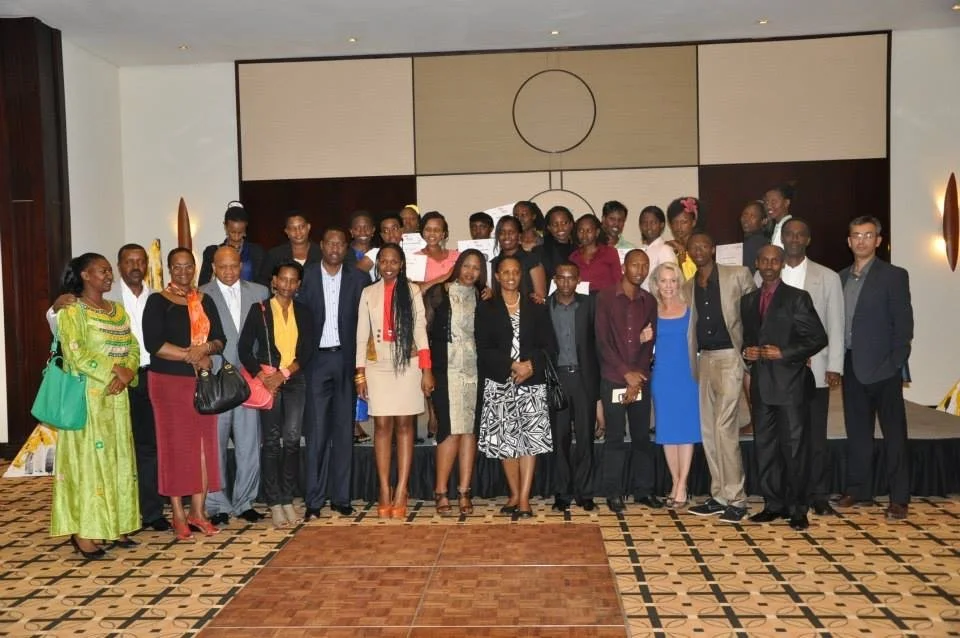
The full gathering at the Women's Potential in Cinema closing ceremony — graduates, government ministers, and international partners, Kigali Serena Hotel, 2013. A workshop graduate receives her certificate of completion from a Rwandan government official at the closing ceremony, Kigali Serena Hotel, 2013.
Left: the full gathering — graduates, government ministers, and international partners · Right: a graduate receives her certificate of completion
A graduate receives her certificate at the Umbrella Cinema Promoters launch, with a Rwandan government official and international partners present, Kigali Serena Hotel, March 24, 2013.
The certificate presentation, with partners and dignitaries · Kigali Serena Hotel, 2013

The Partners Who Said Yes

Umbrella Cinema Promoters did not launch alone. It launched with the backing of institutions that recognized what was being built before it was fully built — a signal that the work had weight, and that the world was ready to support it.

Founding Partners · 2013

Ministry of Youth & ICT · Rwanda Ministry of Sports & Culture (MINISPOC) · Rwanda GirlHub National Treasure Athletics & Arts Foundation · Florida, USA U.S. Embassy in Rwanda

What Followed

The Women's Potential in Cinema workshop trained twenty young women filmmakers and established Dydine as an emerging voice in Rwanda's film community. It was the first expression of a conviction that would, in the years that followed, grow into something far larger.

Late 2013

Dydine is appointed Youth Peace Ambassador for Aegis Trust — the organization that operates the Kigali Genocide Memorial. She then travels across Rwanda conducting interviews with survivors, perpetrators, leaders, and returnees for the Kwibuka 20 documentary — commissioned by the Kigali Genocide Memorial and the Office of the Presidency of Rwanda.

April 2014

Kwibuka 20 — the twentieth commemoration of the 1994 Genocide Against the Tutsi. The documentary is screened globally. Dydine relocates to Los Angeles.

2015–2016

First US speaking engagement at the University of San Diego. Publishes Embracing Survival — her first book. Becomes a permanent speaker at the Museum of Tolerance, Los Angeles.

2020

Co-founds Kind Kulture in Los Angeles with Alex Anderson. The conviction she carried from Kigali becomes a full institution — now reaching 100,000+ students across three countries.

2026

Kind Kulture announces The Center for Human Dignity — Los Angeles. The institution Dydine began building in a Kigali hotel ballroom in 2013 is coming home to its permanent form.

More than a decade separates the Women's Potential in Cinema closing ceremony from the opening of Stories in Color in Los Angeles in 2027. But the distance is not as great as it appears. In both cases, the act is the same: creating a structured space where someone who carries a story is given the tools, the time, and the audience to tell it.

"One's own life experiences are not theirs to keep, but ours to teach."